Although streaming movies for free might sound synonymous with piracy, there’s a bevy of free, legal streaming content on the internet. In fact, there’s almost an overabundance of streaming services.
Whether you’re looking for movies or television shows, finding streaming video is totally feasible. It just requires you to search in the right places. With that in mind, here are the best free movie streaming sites to check out.
What to Expect From These Streaming Sites
There’s a ton of free and legal video online, and as such you’ll find a real mix of content. A healthy portion of the movies available to stream for free are public domain works. Because these films have lapsed in ownership and fallen into common property, many sites host such video treasures. These are the sorts of films Mystery Science Theater 3000 (MST3K) used to watch and comment on. Yes, You CAN Watch TV Online Legally & For FreeYes, You CAN Watch TV Online Legally & For FreeEveryone knows that there are lots of illegal ways to watch your favorite shows online, but there are also plenty of perfectly legal (and free) ways. Here are some of the best... Read MoreBut it’s not just B-movies available to stream online. Rather, many big budget releases can also be found. Often, these are ad-supported. Like watching a movie on television, you’ll have to sit through limited commercials. Nevertheless, movies are usually presented uncut. Just don’t expect to see the latest releases.
Instead, you’ll mostly see movies dating back anywhere from a few months to many years. Additionally, you can find some original productions, such as the Snatch TV series on Crackle. Need help figuring out what to watch next? These sites will help you find what to watch next. 5 Sites to Find Anything Shown in Movies and TV Shows5 Sites to Find Anything Shown in Movies and TV Shows Movies and TV shows have a big impact on what we like. They go beyond product placements. If you saw something in a movie or a TV show, you'll find it on these sites. Read More
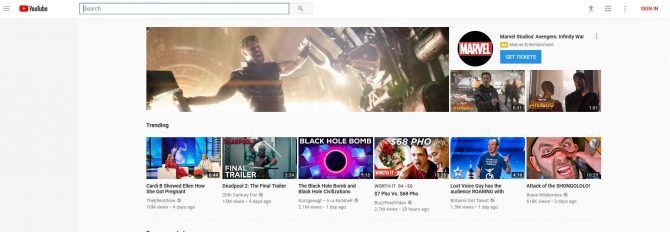
It’s no surprise that YouTube ranks among the best free movie streaming sites you can find. There’s a ton of free films to pick from, including many public domain films from channels such as the aptly titled Public Domain Films and Public Domain Cinema. Furthermore, sites such as Popcornflix host full movies via YouTube.
There’s a fantastic mix, from gems like Plan 9 From Outer Space, to action movies such as Recoil with Danny Trejo and Steven Austin, cult classics including Curse of the Puppet Master, and more. You may have to dig for what you most want to watch, but for those with patience, YouTube is a treasure trove of free, legal streaming cinema.
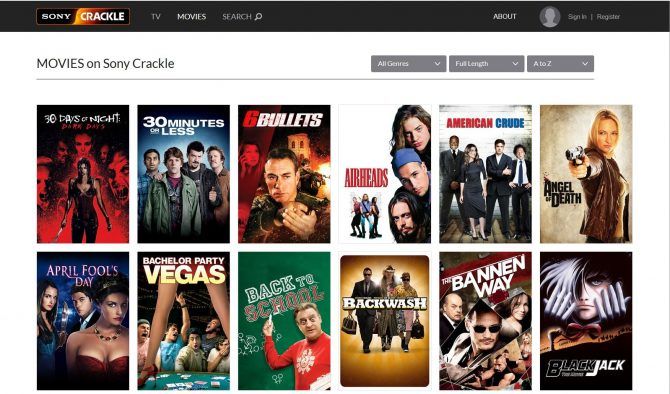
Boasting a solid array of syndicated content and original productions, Crackle is a must for any film buff. Its rotating selection varies, but you’ll find quality movies such as action comedy Hot Fuzz, gothic horror flick Bram Stoker’s Dracula, the masterful 1988 remake of The Blob, Rodney Dangerfield comedy Back to School, and I Know What You Did Last Summer.
Aside from films, Crackle features television shows such as Blue Exorcist, Seinfeld, and even original programming like its Snatch original series. With its robust lineup of movies and shows, we think Crackle is one of the best free Roku channels. The 20 Best Free Roku Channels You Shouldn't MissThe 20 Best Free Roku Channels You Shouldn't Miss Having already recommended the best private Roku channels for you to install, here is our pick of the best public Roku channels you really shouldn't miss. And even better, they're all free. Read More
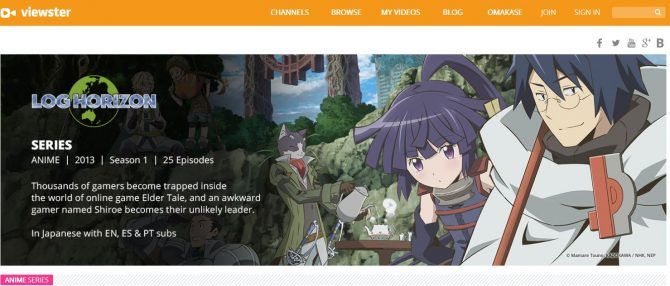
Although it’s anime-centric, there’s a mix of movies you can find on Viewster. Notably, Viewster features a robust line up of documentaries, films like Street Fighter II, and Lily C.A.T. Plus, you can legally stream shorts and television series including Murder Princess.
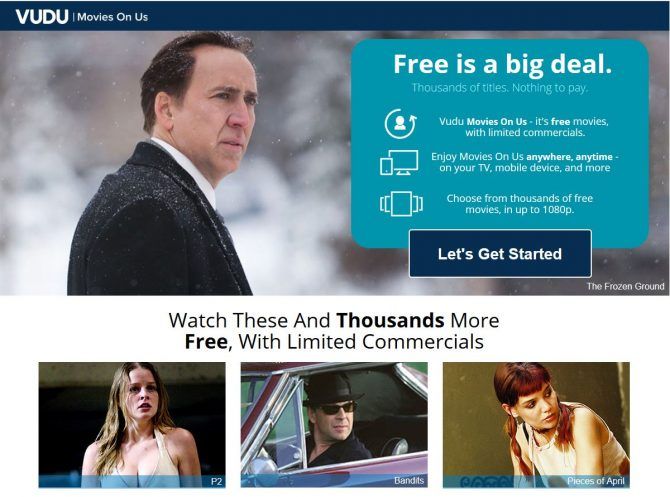
While Vudu is best known for its digital video rentals and sales, the Vudu Movies on Us section makes it one of the best free movie streaming sites. With a comprehensive array of movies such as Bull Durham, Showgirls, and Return of the Living Dead, it’s a fantastic service.
Vudu Movies on Us operates in a similar way to Crackle by providing full, uncut movies with limited commercials. Through hosting films with ads, Vudu is able to offer free movies and TV shows.
You still need to register for a Vudu account to use this service, but it’s totally worth doing so. Moreover, you can use your account to activate digital copies of movies and shows, as well as buy and rent movies from Vudu. Vudu: Everything You Need to Know to Get StartedVudu: Everything You Need to Know to Get StartedVudu is a streaming service you have probably heard of, but maybe never used. In this article we'll explain what Vudu is and help you get more out of it. Read More
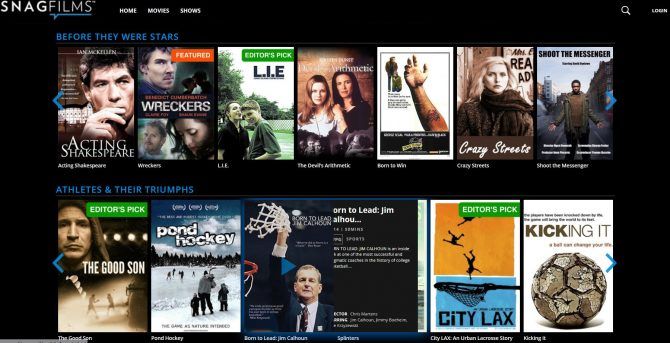
For a free Netflix alternative, check out SnagFilms. With unique categories such as “Before they were stars” and “Athletes & their triumphs,” SnagFilms specializes in fresh content. The library of more than 2,000 videos includes films, shows, and documentaries. Additionally, there’s a portion of original comedy shorts.
There’s a fantastic classic movies category as well. Don’t expect a ton of well-known fare, but for under the radar movies and more, SnagFilms is a gem.
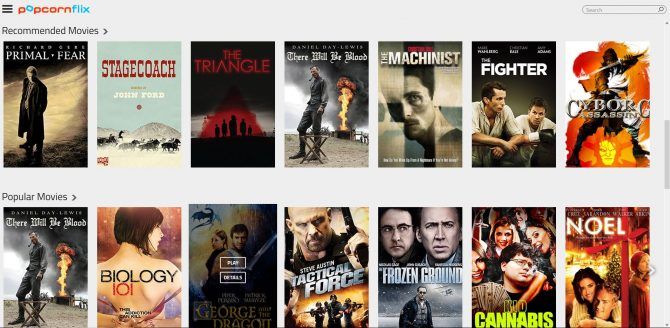
Like Crackle, PopcornFlix presents full movies with limited ads. Here, you’ll find a range of movies in a rotating selection, from Sunset Boulevard and A Clear and Present Danger to Murder on the Orient Express and There Will Be Blood.
Flicks are segmented into categories such as popularity, genre, new arrivals, and staff picks, making PopcornFlix easy to use. With a beefy lineup and excellent navigation, PopcornFlix is an awesome choice for free, legal movie streaming.
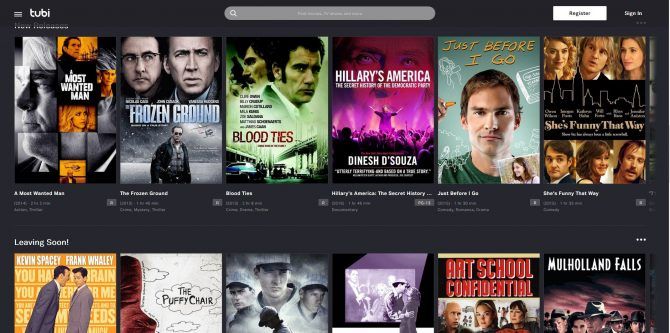
Providing free movies and shows, Tubi TV is a fantastic service. Here, you’ll be able to view newer movies including Lords of Salem, A Most Wanted Man, and Bulletproof Monk, as well as older titles such as sci-fi cult classic The Running Man.
Helpfully, Tubi TV offers a “Leaving Soon” category so you can stream movies and shows before they become unavailable, and thus prioritize your streaming queue. You will need to register to watch mature content, but creating an account is painless enough.
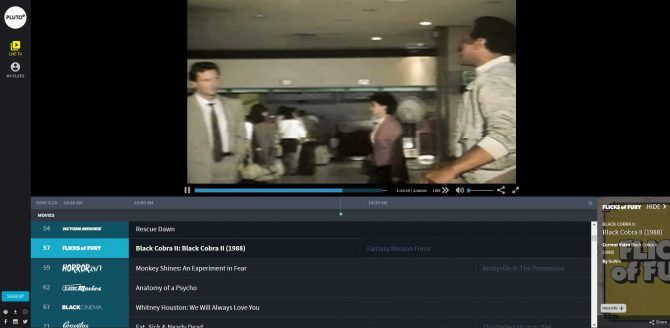
Because Pluto TV features a live TV section, it’s easily one of the best free movie streaming sites. You can stream from the likes of Pluto Movies, Fox Sports, and specialized channels like Classic Movies and Horror 24/7. Plus, there’s an on-demand video library for instant movie watching.
With the live television aspect, Pluto TV is a must-have for cord-cutters.
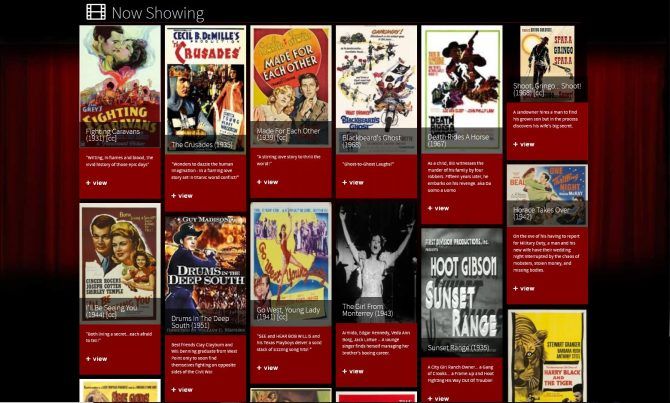
As the name suggests, Classic Cinema Online focuses on older, classic content. Even its website aesthetic captures a decidedly retro vibe with a backdrop of red theater curtains. You can find classics such as Casablanca, Jane Eyre, and The Wasp Woman.
However, the inclusion of movies such as Muscle Beach Party does call into question the definition of “classic cinema.” Nevertheless, Classic Cinema Online is pure gold for old school movies.
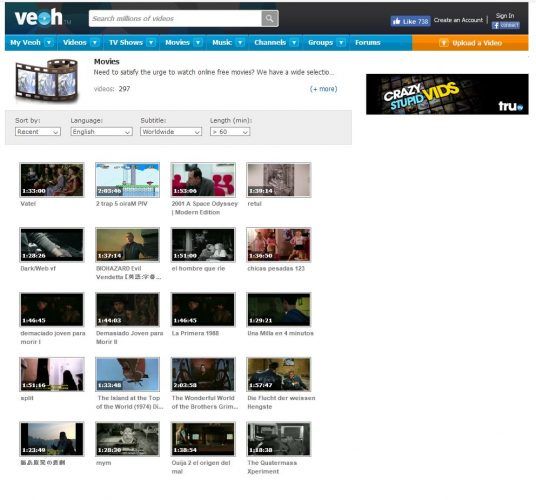
On Veoh, you’ll be able to stream tons of movies and shows. There are a lot of older films, such as Nosferatu. It’s akin to YouTube in that Veoh hosts user-submitted content and videos from established sources like CBS.
Since Veoh boasts a solid filtering system, you can select options such as language and video length to find what you want to watch. Veoh ranks as one of the alternatives to YouTube. Just beware of the popups. 10 Video Sites That Are Better Than YouTube10 Video Sites That Are Better Than YouTube Here are 10 great alternatives to YouTube, although the "better than" is obviously open to debate... Read More
A vinyl record is breakable: not terribly, but
obviously. Pull it from between the sheaths of its cover, and the rings
shine. Drop it, and it won’t shatter — but bend it, and it’ll snap. To
keep a vinyl record in good condition, to make sure it will last to be a
thing that can survive you, you have to be careful with it. You have to
appreciate its very existence.
For years, critics and market researchers have treated
the vinyl medium’s resurgence in the digital age with the same kind of
tentative caution. Connoisseurs are grateful for the format’s return,
for the permanence and tangibility it offers. But vinyl’s resurgence is
always tinted by a looming question: Is vinyl really back, or is it just
a trend?
Vinyl is selling, but it can’t save the industry
For the 11th year in a row, Nielsen Soundscan reported
an increase in vinyl albums sold in the United States. Consumers bought
13 million vinyl albums in 2016, an increase of 10 percent over 2015.
That’s more vinyl records sold last year than from 2008 to 2012, the
heralding of the genre’s comeback, combined. Compare that data with
sales of CDs (down 16.3 percent) and digital sales (down 20.1 percent),
and vinyl is the only music format with stable sales; everything else is
in rapid decline.
The Nielsen Soundscan numbers make clear that the only
sector of the music industry that’s succeeding these days is vinyl,
which makes it an easy “savior” for a music industry that hasn’t figured
out how to make money off streaming as other physical formats continue
to decline. Due to the streaming market, artists are making less money
off listens to their music than ever before, and major (and minor,
indie) labels haven’t figured out how to reliably make money without
physical sales. Many of these labels are now pinning their dreams of the
profits of yesteryear to these spinning plastic disks that sell at
higher prices for nostalgic value.
But the vinyl obsession is still difficult to predict, making it a problematic savior figure.
Using the midyear vinyl numbers in July 2016, Michael Nelson argued for Stereogum
that not only have we reached “peak vinyl” but we’d passed it. Nelson
looks at the year-over-year increases in percentage sales of vinyl from
2012-’16 midyear reports to show a bell curve (14.2, 33.5, 40.4, 38.40,
11.5), and uses this to argue that the bell curve will continue
downward. “If that arc continues on that trajectory (and I’ll be shocked
if it doesn’t), vinyl sales are gonna plateau sooner than later,”
Nelson argues. “And not long after they plateau, they’re gonna crater.”
Nelson’s not alone in his fear that the vinyl obsession
might be a Band-aid to the industry’s profit issues more than a
solution. Doomsday rhetoric around vinyl began in 2015 when Marc Hogan
wrote a piece for Stereogum titled “Have We Reached Peak Vinyl?”
which argues that because the music industry has lost any semblance of
an idea for how to make money off art, vinyl is a doomed product.
Both Nelson’s and Hogan’s arguments gloss over a key factor in the life of vinyl records, though.
True vinyl success might not actually be a win for the labels
Both of those Stereogum pieces write about vinyl in the
context of the ever-in-danger record store, the majority of which closed
fairly quickly over a very brief period of time in the early 2000s.
This was a shock to the industry, and signaled a lack of interest that
very quickly led to a lack of profit. Without stores to ship new music
to, how could consumers find it?
Some of the concern regarding where and how the actual
vinyl transaction occurs has been mitigated as major corporations like
Amazon begin to offer robust vinyl selections. But all of that vinyl —
the vinyl that Nelson’s and Hogan’s articles are concerned with — is
newly produced and pressed. And therein lies the complicating factor in
vinyl’s supposed savior status.
“What these mainstream stats never capture is the massive
secondhand market and independent stores that have never gave up on
vinyl,” Dominik Bartmanski, the author ofVinyl: the Analogue Record in the Digital Age,
tells me. “That's important, and these sections of the market continue
to be important for vinyl's relevance as an economic good, and above all
a cultural good.”
Anecdotally, when I think about the vinyl albums I (a
music person) bought in 2016, this assertion makes sense. Of the 10
vinyl albums I bought in 2016, I purchased seven of them secondhand at
record stores. None of those seven albums got counted in the Nielsen
consumer report, and the year-over-year change in percentage of
secondhand albums bought isn’t counted at all right now.
A man browses through secondhand records.
Stuart Freedman via Getty Images
My experience isn’t unique, either. Many people buy
secondhand vinyl because labels reprint very few older albums. Sure, if
you want, say, David Bowie’s Aladdin Sane (a 1973 album), you can buy it as a new edition
on Amazon for about $13 — but that’s because Bowie died last year, and
consumer interest in his records shot up. But what if you wanted to buy
another 1973 album, like Call Me by Al Green? You can buy that on Amazon, but it’ll cost you $43.12. At the secondhand shop in my neighborhood, I found it for $17.89.
Unlike some other formats, vinyl records hold up over
time, meaning their secondhand market is pretty well-stocked (not to
mention those records that are handed down between generations). To find
an obscure or specific album from the original vinyl era, you’ll very
likely have to go to a secondhand shop, where it’s been purchased from a
previous owner. Under this model, the question then becomes: Which part
of the music industry is vinyl expected to save?
Let’s say I take my shiny three-year-old Lana Del Rey Born to Die
vinyl to a secondhand store. When I bought it the first time at a
concert, everyone made money: Lana, her label, the songwriters and
engineers, the people working the booth. But on second sale, only two
people make money: me and the owner of the secondhand shop. That’s how
all secondhand sales work, but if vinyl’s resurgence is mainly taking
place in resale markets — which I’d argue it is — it’s not going to help
the industry at large at all.
Vinyl doesn’t seem to be going anywhere
Because the secondhand market is untraceable and doesn’t
really make any money for the greater industry, almost all of the focus
(both in vinyl-as-savior narratives and in doomsday narratives) is on
how well new vinyl is selling. And while it’s selling better
than CDs and digital albums, it might not be sustainable for the larger
industry.
The discussions around peak vinyl and whether or not
vinyl will continue to boom often circle around a deeper, greater fear:
that the music industry is broken in a way that cannot be fixed. Because
the industry is still largely controlled by major labels, and there is
no clear way to pay artists for work that is streamed hundreds of
thousands of times, only to make them a few hundred dollars, vinyl has
become a false messiah for an industry that’s forgotten how to make a
profit.
“The drop-off in CD sales after the industry’s 1999 peak
coincided not only with Napster but an early-2000s U.S. recession;
meanwhile, real wages for Americans on average have barely budged in decades,” Hogan wrote for Stereogum. “To a degree, the fate of the current vinyl boom is inextricable from what happens to the broader economy.”
Employees at Erika Records work in the record pressing plant in Buena Park, California.
Frederic J. Brown /AFP/Getty Images
To a degree, Hogan is right. During the next recession,
consumers will probably buy fewer $20 vinyl records, just like they will
buy less organic food, and fewer hardcover books, and less bespoke
fashion. But that doesn’t mean those trends will die, or even that they
won’t be able to recover. In the last US recession (in 2009), for
example, book sales took a huge hit
that some stores, like Borders, never recovered from. Since the economy
has recovered, book sales have returned — and, as with vinyl, they’ve
mainly returned to independent and secondhand stores.
“I do not think the rekindled interest in vinyl is a
passing trend, or a mere retro fashion or a short-lived vintage craze,”
Bartmanski tells me. “If mainstream demand continues to grow, new
pressing machines can be built, and prices are likely to grow too; if it
plateaus and stays at this relatively healthy level, it means it can
live on, certainly in cities with vibrant music cultures.”
The resurgence in vinyl, as Bartmanski’s book argues,
doesn’t just show us something about the music industry; it shows us
something about ourselves. “Music is more than data, more than
convenience,” Bartmanski says. “Vinyl's an equivalent of quality slow
food in music consumption.”
And that seems to make all the difference in whether
people perceive vinyl as thriving or dying: satisfaction. According to
Bartmanski, people buy vinyl because it sounds different (not better, just different),
and because it’s an object they can hold in their hands. Consumers are
attracted to vinyl because they like the big-format art covers, and they
like to keep the music in their collection. Sometimes they even buy
vinyl just because they like how fragile it is. Just because the format
can be broken doesn’t mean it will.
If
you don’t have a fireplace, or live somewhere where you can see
peaceful snowfall outside your window…don’t fret! After you’re done watching Christmas movies,
the free screensavers below can provide some great scenery for holiday
parties or while the family is opening presents on Christmas morning.
Fun fact: the yule log virtual fireplace is scientifically proven to make your room feel warmer! The Roku Channel –
In addition to hundreds of free movies and TV shows, The Roku Channel
has a special row this month titled ‘Classic Holiday Sounds &
Specials’ with the screensavers below plus much more holiday
entertainment.
Roku Winter Wonderland
Yule log fireplace with crackling
Holiday fireplace with music and crackling
Snowflakes with music
The magical Christmas window with music
The cowboy fireplace with holiday music
Christmastime – Features the tree and fireplace scene and snow-themed screensavers
The Menorah 2017 – This free virtual Menorah has a scene and traditional blessing for each of the 8 nights of Hanukkah Best Christmas Channel Ever 2017
– Highlights include the Christmas tree and fireplace screensaver seen
below along with other fun Christmas TV episodes, movies and more
Seasons Streamings!
Even though the Nvidia device is more powerful and boasts a more user-friendly operating system in the shape of Android TV, the Roku devices have one huge advantage: private channels.
Sure, you can sideload apps onto your Android TV device, but they don’t come close to Roku’s private channels in either ease-of-access or ease-of-installation. How do you install private channels on a Roku? Keep reading to find out.
Installing Private Channels on Roku
Private channels aren’t listed in the main Roku
Channel Store. Therefore, before you can install one, you need to know
its unique code. Where can you find private channel codes? Your first
port of call should be the Roku subreddit, where some of the best private channels are available.
Second, check out the many websites dedicated to cataloging private channels. Some of the best are rokuguide.com, streamfree.tv, and rokuchannels.tv.
When you’ve got a code, follow these step-by-step instructions:
Fill in your account credentials and click Sign In.
Go to Manage Account > Add channel with a code.
Enter the channel code and click Add Channel.
Click OK on the next warning screen.
Confirm the installation by clicking Yes, add channel.
Technically,
the channel can take up to 24 hours to appear on your device. However,
you can make it appear instantly by turning on your Roku and going to Settings > System > System Update > Check Now.
Television shows have come a long way over the years and not just in
terms of switching from black and white to color. The days when TV
couples slept in separate beds and curse words were bleeped are over.
However, if you miss those good old times of wholesome television then
you’re in luck. Amazon Prime
Video has an awesome collection of classic TV shows available to watch
with your membership. So why not make a snack, gather the family around
the old gogglebox, and step back in time with these favorites from
yesteryear.
Real-life
couple Lucille Ball and Desi Arnaz star in this hilarious comedy
debuting in 1951. Lucy is the zany wife of Ricky Ricardo, a Cuban
bandleader who never gives in to her desire to get on his stage. And
Lucy, along with her neighbor and best friend Ethel, certainly gets into
some silly and sticky situations.
From the job-switching episode
where they stuff their mouths with chocolates, to the trip to Italy
where Lucy squashes grapes with a local, I Love Lucy is a true classic.
In
another husband and wife sitcom, Jackie Gleason and Audrey Meadows will
make you laugh from their tiny Brooklyn apartment. This first episode
aired in 1955 and, using comedy, follows the couple through their
struggles. Ralph Kramden is forever scheming for an idea to make big
money while his wife Alice is always there to rein him in at the end.
If you have never seen The Honeymooners, then check out the show that coined the phrase, “One of these days Alice — Pow! Straight to the moon!”
You may have seen the 1993 movie of the same name, but if you never watched the original TV hit, The Beverly Hillbillies,
then you are missing out. Follow the Clampett family as they strike it
rich in their country cabin home and head to high-class Beverly Hills
with their millions. The humor comes in every episode as members of the
family try to fit into city life.
When you are ready to check out
their cement pond, follow Jed, Granny, Jethro, and Ellie May as they
move to Beverly (Hills, that is).
The Andy Griffith Show
tells the story of a widower sheriff named Andy Taylor. Living in
Mayberry, Andy, his son Opie, Aunt Bee, and Deputy Barney Fife will
definitely make you chuckle. Starring Andy Griffith, Don Knotts, and Ron
Howard, you already know this is the perfect crew to give you a laugh.
The show debuted in 1960 and includes comical characters bumbling
through their daily lives in small town USA. The Andy Griffith Show ran for many years, turning from black and white to color and keeping audiences laughing along the way.
You may not have heard of Petticoat Junction,
but if you plan to visit Hootervile, you will enjoy your stay. A mother
and her three daughters run the Shade Rest Hotel in the heart of
another small town sitcom. But in a boring train-stop town, what is
there for three beautiful young ladies to do? Tune in to find out what
fun they concoct in this 1963 comedy.
It may not be even close to The X-Files, but My Favorite Martian
is a funny take on an alien story. Premiering in 1963, this sitcom
follows a Martian who is stranded on earth after his ship crashes. He
stays with a reporter and is disguised as the young man’s uncle.
Busybodies sense something is up and the Martian uses his powers here and there, bringing you a bundle of giggles.
You likely recall The Three Stooges,
but have you ever actually watched an episode? With silly, slapstick
humor, the comedy team of Moe, Larry, and Curly have been making people
laugh since the 1920s. While the stooges went through their stages, from
Curly to Shemp to Joe, Moe and Larry remained to keep the crew in
check.
For a comedy that spans decades, check out at least one episode, if not more, of the iconic show The Three Stooges.
Do you remember those cute little twins Buffy and Jody and their big sister Cissy? If not, then it is time for you to watch Family Affair.
All three kids are taken in by their uncle, played by Brian Keith. And
the British butler Mr. French, played by Sebastian Cabot, keeps his eye
on them as much as possible.
Considered a comedy and debuting in 1966, this timeless show will touch both your heart and your funny bone.
Enter a different dimension with Rod Serling in the supernatural series, The Twilight Zone.
The show first aired in 1959 and ran for five years bringing a
suspenseful look at the unexplained. This series can be described as
science fiction, horror, or drama, depending on the story. But one thing
is for certain: The Twilight Zone is entertaining and enjoyable within each 30-minute episode.
If you enjoy the Lone Ranger and Tonto in the old west, then take a look at The Cisco Kid
and his sidekick Pancho. What started as a one-shot comic turned into a
six-year show beginning in 1950. This serious but comical team fights
to keep the locals safe from corruption.
Filmed in color, you will enjoy the humor that Pancho brings to every episode of The Cisco Kid.
Star Trek
is one of the most popular science-fiction dramas of all time, and
loved by many. The original series premiering in 1966 stars William
Shatner, Leonard Nimoy, and George Takei. The crew pilots the Starship
Enterprise as it travels through space exploring the unknown.
Find
your favorite episodes or check out entire seasons. Captain Kirk and
Dr. Spock away your visit, so say “Beam me up, Scotty” and head to Amazon Prime Video for Star Trek. And while you’re there, take a peek at shows you can download and watch laterHow to Download Amazon Prime Videos to Watch OfflineHow to Download Amazon Prime Videos to Watch OfflineAmazon has announced
that Instant Video now allows offline viewing of movies and television
shows on Android and iOS devices, and we have the full lowdown on how
you can initiate this fantastic feature.Read More.
Well before Tom Cruise starred in the movie, Mission: Impossible
was a popular television show. This drama series, premiering in 1966,
follows a group of spies on various, dangerous missions. Known as the
Impossible Missions Force (IMF), the team tackles espionage with tact
and talent.
If you want to see where it all began before it hit the big screen, check out the original Mission: Impossible.
Maybe westerns are more your speedLove Classic TV? 4 Websites For Your Time Traveling TubeLove Classic TV? 4 Websites For Your Time Traveling TubeWe all know that modern
television just can't beat classic TV shows. You have to love the
melodramatic acting, the cocky charm and wit, and the innocent
story-lines (golly-gee-willikers, right?) Yes, I know I'm
generalizing...Read More and if so, The Rifleman is your show.
Starring Chuck Connors, you can watch this rancher take on desperados in
the old west. While keeping his son safe and his land secure, this
Union Civil War veteran and widower knows how to handle his rifle. For a
good, old-school western series, check out The Rifleman.
On for almost 15 years, Bonanza
takes you into the Cartwright family home on their ranch, the
Ponderosa. The show stars Lorne Greene, Michael Landon, Dan Blocker,
Pernell Roberts, and David Canary, for a wonderful lineup of talent.
Become a Cartwright for three episodes as these men defend their land and help their community in this classic TV drama.
FFmpeg is a freeware video and audio encoder. There are versions for Windows, Linux, and MacOS.
FFmpeg GUIs
A GUI is a graphical user interface that makes it easy for a user to
work with FFmpeg. Since FFmpeg is open-source, various developers have
built software to utilize it with simple GUIs.
Benefits to Using a GUI
Since FFmpeg is used through a command line interface (CLI), there is
a relatively steep learning curve for users who are unfamiliar with
this type of interface. Using a CLI requires that the user understand
how to write commands with the proper language and syntax. Software that
provides a GUI makes using FFmpeg as easy as clicking a few buttons and
setting a few parameters. Examples:
Limitations to Using a GUI
Using a GUI allows the user to jump right into FFmpeg, but it
obfuscates what’s happening “under the hood.” Some users may want to
know the FFmpeg command generated by using the GUI, and that is not
always accessible. Also, GUIs are not always up to date with the latest
version of FFmpeg.
Stream4S opinion on when H.265 will become the standard codec on the market.
Remember those frustrating times
when you were watching a video or a movie online and all of the sudden
you experienced a loss of quality? Now it can be possible to stream high-quality videos in congested network environments in a faster and virtuous way. Conceived to boost video streaming, High Efficiency Video Coding (HEVC), or H.265,
is a video compression standard designed to substantially improve
coding efficiency when compared to its precedent, the Advanced Video
Coding (AVC), or H.264. With an increasing growth of video streaming on
the Internet over popular websites such as Netflix and YouTube, and with
4K cameras gaining new ground in the market, a considerable amount of
storage and bandwidth is required. HEVC promises a 50% storage reduction
as its algorithm uses efficient coding by encoding video at the lowest
possible bit rate while maintaining a high image quality level.
As many of us, Stream4s
believes HEVC will revolutionize how video data is displayed, either
online, on television and even in the surveillance industry. With this
new format, image resolutions around 8192×4320 become possible to
display and stream. To demonstrate the incredible power of this codec, a
subjective video performance study was made between these two codecs to
understand how intensely is this bit reduction. The study showed the
bit reduction is inversely proportional to the video image quality,
where HEVC/H.265 presented a bit reduction of 52% at 480p and 64% at 4K
UHD when compared to H.264. Besides this outstanding bit reduction, when
compared to H.264, HEVC/H.265 delivers a significantly better visual
quality, when compressed to the same file size or bitrate.
Powerful Streaming — at what cost?
Even
though HEVC is already finalized, it is still not popular. Apart from
the fact that the codec is patented by various parties and it is
associated with high licensing fees, HEVC/H.265 comes with the trade-off
requiring almost 10x more computing power. This new technology is on
standby until the hardware market adapts to it, as it happened already
with H.264, launched in 2003 but only gaining popularity a few years
later. Hardware manufacturers are already starting to adjust their
products to support this new format to fulfill the intense market need.
Even though some softwares such as VideoLAN are capable to decode such
codec, software decoding, although more flexible, is not an option since
hardware decoding is usually faster and saves battery life
tremendously. Nevertheless, hardware still takes up valuable disc space
on either the CPU or GPU.
HVEC vs H.264 — a technical comparison
Both
codecs work by comparing different parts of a video frame in order to
find the ones that are redundant within the subsequent frames. These
areas are replaced with a short information, describing the original
pixels. What differs HEVC/H.265 from H.264 is the ability to expand the
size of these areas into bigger or smaller blocks, called coding tree
units (CTU) in the HEVC/H.265. The pattern CTU sizes can be from 4×4 to
64×64, whilst H.264 only allows a maximum block-size of 16×16 (CTU is
particular feature of HEVC). An improved CTU segmentation, as well as a
better motion compensation and spatial prediction require much more
signal processing capability for video compression, but has a
significantly less impact on the amount of computation needed for
decompression. Motion compensated prediction, another great progress in
HEVC/H.265, references blocks of pixels to another area in the same
frame (intra prediction) or in another frame (inter prediction).
As
mentioned above, CTU are one of the HEVC’s main coding tools. Apart
from this, the codec relies on paralleling processing computing
techniques to make it even faster and supports advanced extensions as
AVX/AVX2 and FMA3/FMA4. The individual rectangular regions that divide
the image are independent and enable parallel processing. Besides, HEVC
also has another feature that H.264 doesn’t possess: Wavefront Parallel
Processing (WPP), a sort of decision tree that grants a more productive
and effectual compression.
Several
other coding tools used in H.264 are continued in this new codec,
although with some slight, yet unprecedented, changes. The lossless data
compression entropy coding, the Context-adaptive binary arithmetic
coding (CABAC), is preserved in HEVC/H.265 but in a slightly upgraded
version. Intra prediction is another feature that suffered significantly
improvements in relation to H.264. HEVC stipulates 33 directional modes
while H.264 limits them to 8 and allows DC intra prediction as well as
planar prediction. An additional improvement is mainly due to the
Adaptive Motion Vector Prediction, the newest method for inter
prediction as it uses the picture information in a more concise way.
Thanks to the notably improvements that can be seen in this new codec, Stream4s is confident that HEVC/H.265 will become the universal standard codec, as soon as the hardware catches up.
HEVC/H.265
not only has a better visual quality at a low storage and bandwidth but
also a dexterously coding algorithm by encoding motion vectors with
much greater precision and minimal residual errors. Besides the
preeminent method used for inter prediction, this new codec also
presents an improved deblocking filter and sample adaptive offset to
reduce even more artifacts.
Blu-ray has finally won the high definition
format war, but that is just the beginning. There is a lot of confusion
out there among the general public about the difference between DVD and Blu-ray
discs. Although Blu-ray discs look exactly the same as DVDs in size and
shape there are many differences between the media, including storage
capacity, laser technology, disc construction, image resolution and
player compatibility.
Storage Capacity
Storage capacity is measured in gigabytes (GB), like computers and
iPods. The more GB the disc has more information it can hold.
DVD-
Single layer DVDs can store about 4.7 GB of data, which is about two
hours worth of movie. These are commonly referred to as DVD-5s. Double
layer DVDs, or DVD-9s, can store twice the amount of data at 8.7 GB.
This equals about four hours of movie, or one “Lord of the Rings” movie.
Blu-ray-
Single layer Blu-ray discs store approximately 25 GB of data, this
equals about two hours of high definition information or 13 hours of
standard definition information. Double layer Blu-ray discs can hold
about 50 GB equaling about four and a half hours of high definition
information or 26 hours in standard definition. Potentially you could
put all three “Lord of the Rings” movies on one double layer Blu-ray
disc.
Laser Technology
Lasers are used
in both media to read the information stored on the disc. As the disc
spins the laser reads the information and transfers both picture and
sound to the television.
DVD- DVD players
use a red laser at 650nm wave length to read DVD discs. As the disc
spins the laser reads the information encoded on the media and produces
an image and sound on your television.
Blu-ray- Like the name
suggests Blu-ray players use a blue laser to read the stored
information. Blue laser wavelengths are shorter than the red at 405nm
and are about two and a half times smaller in diameter than red lasers.
This allows for closer and more precise reading of information stored on
the disc.
Disc Construction
Physically, Blu-ray and DVD discs are identical. Both media have grooves
or pits on their bottom layer than enables the laser to penetrate
through and read the stored information.
DVD- Since DVDs are
read with a red laser the grooves on its underside need to be wide
enough to accommodate the larger wavelength. Because the grooves are so
far apart only 4.7 GB of information can be stored on each layer of the
disc. DVDs also include a protective layer designed to resist
scratching.
Blu-ray- The grooves on a Blu-ray disc are much
thinner and closer together because the blue laser used to read the disc
has a shorter wave length and is two and a half times thinner than the
red laser. This allows the Blu-ray disc to squeeze almost five times as
many grooves on to a disc exactly the same size as a DVD. Blu-ray also
includes a protective layer to prevent scratches. This protective layer
is physically thinner than the one on a DVD, but it has a hard coating
that makes it more scratch resistant.
Image Resolution
Image resolution is measured by the number of vertical lines times the
number of horizontal lines of light in a picture. It is represented by
the number of horizontal lines going across the screen like 480, 720 or
1080. The higher the number the higher the resolution and more detailed
the picture.
DVD- Almost all DVDs have a standard definition
resolution of 480 or enhanced definition resolution of 520. These
resolutions look great on a standard “tube” TV utilizing all available
pixels on the screen. However, if blown up to accommodate a widescreen
HDTV the picture may look grainy. Although a DVD can store high
definition data it would only fit about 30 minutes maximum.
Blu-ray-
Blu-ray was designed for high definition 1080 display. Since they can
store 25 GB of data you can fit an entire HD movie on a single layer
disc. Blu-ray currently has the best image resolution on the market and
looks great on HDTVs. Blu-ray discs are one of the few signal sources
that displays in 1080, not even HD cable or satellite companies can
claim that yet.
Player Compatibility
Some of us are still recovering from the VHS to DVD format switch of
almost 10 years ago, slowly upgrading our VHS collections to DVD. Now,
there is a new, better format on the horizon and many are still
skeptical. However, you’ll be happy to hear that all Blu-ray players
support DVDs.
DVD Players- Blu-ray discs cannot and will not
play in a standard DVD player, because the red laser used in DVD players
is too large to read the tiny grooves in a Blu-ray disc.
Blu-ray Players- All Blu-ray players currently on the market (including the Playstation 3)
are backwards compatible and will still play standard DVDs. However,
the DVD image displayed, while still decent, will not be high definition
quality like a Blu-ray disc.
Fear not technophobes, the
transition from DVD to Blu-ray will be relatively painless once the
price of Blu-ray players starts to come down. With the exception of
storage capacity perhaps the best thing Blu-ray has going for it is its
higher image resolution and compatibility with standard DVDs. To find
the Blu-ray player that fits your budget see our Blu-ray DVD players
review.
New format trumps its predecessor, plain and simple.
Having soundly defeated HD DVD, Blu-ray now reigns
supreme atop the home video format hierarchy. But in spite of that
convincing victory, BD technology has yet to be fully embraced by
consumers. Like that nagging fly that you just can't seem to swat,
standard-def DVD is still buzzing around.
Last week,
we made a pretty convincing case as to why DVD could be viewed as
"better" than Blu-ray. To the delight of those of you who ripped us a
new one after reading that article (we love a good controversy), this
counter-argument will attempt to prove the opposing view: Why Blu-ray
is better than DVD.
There's no denying that Blu-ray is
technically superior. The picture looks amazing and features like
BD-Live, when properly showcased, are unrivaled.
The hardware may be expensive, but if you're a serious gamer you probably already own a PS3. Problem solved.
The
gloves have come off. It's on like Donkey Kong! (Insert your own cliché
here.) And the Blu-ray vs. DVD battle continues. Check out our reasons
why we think Blu-ray is better than DVD, and let us know what you
think in the comments below.Continues
Freakin' Awesome Picture
There's
no arguing that Blu-ray is the superior format when it comes to audio
and video. It just is. With a resolution that's six times that of DVD, a
quick check of any blockbuster Blu-ray will amaze you with 1080p
sharpness. The colors, the detail, and the clarity of motion are all
vastly improved over their DVD counterparts.
You don't have to be a math genius to figure out that 1080 is more than 420, but as videophiles know, what that really
means is that you're getting more than two and a half times as much
visual information in those tiny little lines on your screen, and that
makes for five times the amount of detail. That allows for more detail,
definition and dimension than you normally get on DVD.
These
days, a lot of films are made with high-definition cameras, so Blu-ray
is able to provide an image much closer to the source. That makes for a
picture that's truer to life and far more attractive than anything in
standard-def. And that's not just the case with new releases either.
Even older titles like The Godfather, animated features like Sleeping Beauty and black and white classics like Casablanca benefit from this technology. It's like discovering your favorite films all over again... for the first time. Or something.
The Godfather on Blu-ray: An offer you can't refuse.
Mind-Blowing Audio
Any
legit home theater enthusiast knows that sound is truly 50 percent of
the entertainment viewing experience. It's a good thing, then, that
Blu-ray's awesome visuals are matched by the stunning depth and
complexity of the surround-sound, with certain discs offering 7.1
surround and all discs providing an infinitely more crisp and clear
audio presentation.
Even if your home theater is not equipped to
handle full 7.1 channel surround sound, the digital Dolby TrueHD and
lossless DTS-HD Master Audio tracks that come on most Blu-ray discs are
more than sufficient to blow the roof off your living room.
Listening to an amazing audio presentation like the one offered on the recent Akira
Blu-ray will change the way you hear movies. There's nothing like the
rich, full, booming sound you get from a truly immersive mix that you
can feel down to your bones. Even in a more quiet, subtle film, you'll
hear background details you might have otherwise missed. Nothing draws
you into a film more than feeling like you are right there in the
middle of the action.
DVD simply can't match the aural awesomeness of Blu-ray. End of story.
Mo' Better Blus
Blu-ray discs allow more
creative potential for the film's extras, animated menus, pop-up tracks
and picture-in-picture features and commentaries. And, of course,
there are all the interactive possibilities of BD-Live -- more on that
in a sec.
The Blu-ray experience allows viewers to explore menu
options without leaving the movie, and to bookmark favorite scenes --
two simple features that have a big impact once you actually begin to
make use of them.
We'll be the first to admit that BD-Live has
left us wanting. The blame for this, however, lies at the feet of the
studios who have not fully grasped how to leverage this amazing
technology.
BD-Live, for any n00bs who might be reading this, is a
set of special online features available on compatible titles to
viewers with an Internet-ready player. You can download extra content,
checkout online bonus features, and participate in interactive chats.
Where DVD might have allowed you to listen to a director's prerecorded
commentary, BD-Live can take you right into his living room for a
real-time conversation about the film -- Universal offered just that
with Guillermo del Toro on the Hellboy II: The Golden Army Blu-ray.
There's
even gaming potential with BD-Live -- another possibility that remains
largely untapped. Take, for instance, the fully interactive,
multiplayer trivia game included on the Men In Black Blu-ray.
It feels more like a full-featured videogame than just another extra on
a movie disc. The online portion of the game features lobbies, the
option to host tournaments for various numbers of players (up to 8),
and the ability to customize questions.
What they said.
Once studios really get hip to BD-Live technology, there will be a lot more cool stuff. We can't wait.
Beyond
the benefits of killer interactive content, certain BD-Live players can
also be upgraded using the BD-Live Connection. Your DVD player just
became a boat anchor.
It Makes Your HD Set-Up Legit
You
know that massive flat-screen HD TV you just got? Or how about that
spiffy surround-sound system? Maybe you just got them to replace a
busted set or components, or maybe just to watch the game. Regardless, everything
is going to be vastly improved by the Blu-ray experience. And it'll
make you feel substantially better about the money you've sunk into
living room technology.
If you're still hesitant about shelling
out for a Blu-ray player, consider that Sony's PlayStation 3 will play
Blu-rays. The Blu-ray features aren't just an afterthought either,
they're a core part of the machine. In fact, the PS3 actually plays BR
discs better than many current standalone players. Yes, it's expensive,
but rumors of a significant price drop persist. But even if you're
just a casual gamer, we think it's worth the money.
The price may drop on Sony's Blu-ray playing PlayStation 3
Blu-ray Players Will Play Old Stuff
Given
the fact that the DVD has been deemed the most successful consumer
product ever, you probably own a ton of them. Not to worry. Blu-ray
players will play standard-def DVDs as well as audio CDs, just like
your old DVD player.
There was a time -- those of you reading
this over the age of 20 will remember -- when the emergence of a new
home video format meant that your entire collection was rendered
obsolete. Blu-ray players play the exact same 12cm and 8cm discs that
you could play in your old school player. So, unlike the jumps from
VHS, to Laserdisc, to DVD, the Blu-ray switch should be completely
painless.
In fact, most Blu-ray players won't just play your
DVDs, they'll make them better. This is accomplished through upscaling
technology, pig's blood, and black magic. (Just seeing if you were
paying attention.) Upscaling boosts your old assy DVDs to nearly
1080p/1080i quality. That means everything you watch will be
astonishing -- except scenes from the Star Wars prequels featuring Jar Jar Binks, which will always look like crap no matter what.
Not an upscaled Episode I DVD screenshot, but even if it were: Still crap.
Technical Knockout
Without
getting overly technical, the term "Blu-ray" comes from the
blue-violet laser used to interpret the data on the disc (as opposed to
the red used for standard DVDs). Because of that laser's shorter
wavelength, a Blu-ray disc is able to compress more information into
the same amount of space, allowing for up to 50 GB of information on a
dual-layered disc (and Pioneer has recently been able to push that to
as much as 500 GB on 20 layers).
OK, maybe we got overly
technical. Anyway... What all of this means for the consumer is that
you're basically getting more content, more interactivity and more
special features in a smaller package. Not only does it save room on
your library shelves, it saves on shipping costs, which can mean a
lower price, particularly on those unwieldy box sets. Imagine getting
the entire series of The Sopranos on, say, 10 discs instead of the current 33 that come in the DVD box.
Too many discs!
Blu-rays
are also more durable than DVDs. Because Blu-ray's transparent cover
layer is only 0.1 mm thick vs. 0.6mm for DVD, there were initial
concerns about BR discs being more vulnerable to light scratching than
DVDs. That's why Blu-ray disc manufacturers developed a hard coating
that protects the discs, making them even more resistant to scratches
than DVDs.
Blu-ray also sports an error correction system which is more robust and efficient than the one used for DVDs. Suck it, DVD.
Given the costs
involved in upgrading hardware and the higher pricetag of Blu-ray
discs, it may take a while before we see the mass adoption of Blu-ray.
Still, the fact that it's a superior format is crystal clear.
Are you a Blu-ray early adopter? Or have you resisted taking the leap? Tell us where you stand in the comments.
Listen to free streaming music and radio stations from all over the world!
Music is the universal language, and with the amazing
convenience of the World Wide Web, more music is available to us than
from ever before in human history. From classic rock to alternative to
baroque instrumentals, it's possible to find free streaming music on the
Web that will cater to virtually any musical taste. In this article,
we'll look at the top fifteen sites for free streaming music, sports,
news, talk shows, and much more. Wherever your taste may lie, you're
sure to find something to meet your needs in one of these offerings, and
all of these are available to listen to via your computer or mobile
device.
Google Play gives
listeners the chance to upload and store thousands of songs from their
own collections for free, create playlists, and listen to hundreds of
thousands of songs in a huge variety of genres. You can listen for free
to the Google Play radio offerings; users have the ability to subscribe
with a small monthly fee which makes the experience ad-free.
More »
If you're looking for something to expand your musical tastes, Hype Machine is
a great choice. This innovative site gives listeners the ability to
find new music via people who are writing about the music that they love
- all in one place, rather than skipping from site to site. It's an
interesting way to find what people are starting to discover.
More »
Shoutcast gives
listeners the ability to listen to over 70,000 stations in a huge
variety of genres, from Alternative to Talk to Holiday. However, that's
not the only thing you can do with Shoutcast - if you want to start your
own radio station here, you can, with free broadcasting tools made
available by the Shoutcast service. This is a great way to get something
started with very little outlay.
More »
AccuRadio makes
listening to music online simply fun. They offer the standard genres of
music, but they also offer enjoyable "channels" that change every so
often and are a great way to discover new music - a nice alternative if
you're looking to discover new artists or genres you haven't listened to
before.
More »
Slacker Radio gives
users the ability to search by artist or song and stations will be
suggested, with the ability to craft that station into exactly how you'd
like it to be. There are different payment levels available here, but
most of the features are absolutely free and listeners can take
advantage of hundreds of stations.
More »
Think of the sort of music you like, and iHeart Radio will
suggest stations for you based on your preferences. You can also use
iHeart Radio to listen to local stations all over the United States and
Mexico, create stations based on popular artists, or discover top
podcasts on a wide variety of subjects.
More »
TuneIn gives
users the option to listen to radio stations, talk shows, podcasts, and
much more. Over 100,000 radio stations, live shows, and lots of other
content are available here for free, including sports, news radio, and
talk shows. The ability to listen to local radio stations all over the
world is a great feature.
More »
977music.com is
100% free for listeners, and you can listen to as much music for as
long as you would like. There are hundreds of channels here programmed
by listeners, and they are available wherever you might have Internet
access - both home and work.
More »
RadioTunes is
one of the most popular streaming music sites on the Web. You can
filter your musical tastes by Style (Smooth Jazz, Easy Listening, Top
Hits, etc.), and Channels (80's, Mostly Classical, Oldies, etc). There
are seemingly unlimited stations to listen to here, and listening is
free (must sign up for a free account).
More »
Radio.net is
a great service; you can access all sorts of global broadcasts here,
from the BBC World Service to Radio Swiss Classic to CBS Dallas.
More than 30,000 radio stations, online radios, and podcasts are
available here to listen to within the USA, Canada, Europe, Australia,
and more.
More »
Last.fm offers
listeners the ability to not only listen to and discover music but also
visualize the listening habits and musical trends that the Last.FM musical community is listening to. It's an interesting way to see what other people are listening to.
More »
You can listen to Soma.fm's
stations right within your Web browser, just like all the other
streaming music websites on this list. There are only a limited amount
of stations here, within highly specialized genres - jazz, chill, indie
folks, etc - all featuring a very California-like vibe. Soma is
especially popular with people looking for background music for tasks
that require concentration.
More »
PublicRadioFan is a massive collection of stations around the globe. You can search by schedules, time zones, station call letters, and more.
More »
Pandora lets
you create your own radio station, from music that you choose, and then
you can continue to improve upon the service's selections as it plays
for you. Thumbs up for something you like, thumbs down for something you
don't. If you'd rather avoid listening to ads every once in a while,
Pandora offers a subscription service for a low monthly fee.
More »
Spotify is
somewhat similar to Pandora, at least in concept. Spotify functions
more of a platform on which you can install and use different musical
applications, such as Billboard's Top Picks, Rolling Stone Music, Share
My Playlists, and Digster. You can listen to entire albums without
paying for them (with only limited commercial interruption), create
playlists, share your favorites with others, and more. Radio stations
are also available on Spotify, but you create them yourself from songs
you already like.
More »


/cdn.vox-cdn.com/uploads/chorus_asset/file/8400053/GettyImages_527468894.jpg)
/cdn.vox-cdn.com/uploads/chorus_asset/file/8400077/GettyImages_670940572.jpg)
 Bill Wilson